Sunday, June 19, 2022
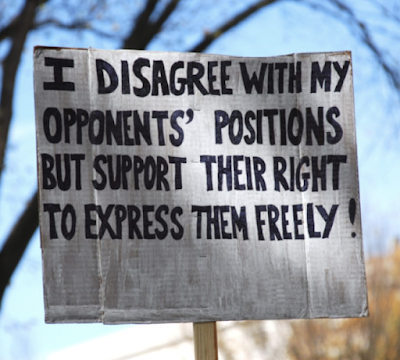
Book Bloggers: Do you believe what you write to be true? Then don't delete comments that challenge you. (And I mean that encouragingly.)
Sunday, April 24, 2022
Covid Operation : What Happened, Why It Happened, and What's Next by Pamela Popper / Shane Prier
If you figured things out a long time ago, then great! But for those only now questioning the truth, good; this is a book to start with if you want to know more.
Covid Operation is cohesively organized, sensibly written, and well documented with supporting evidence at the end of each chapter. The title and subtitle tell you exactly what to expect. It is a quick, easy read about the origins, the players, the purposes, the consequences, and the possibilities beyond. In addition, personal stories (often heart breaking) are included in the "Consequences" chapter.
Covid Operation was written and released in August 2020. Popper suspected early on that the numbers of cases, hospitalizations, and deaths did not justify lockdowns, restrictions, or masks, and she spoke out about it immediately. I cannot remember how I discovered Pam's show, but it was early 2020. I found her short videos on YouTube regarding the universal response to the virus. She talked about how none of it made sense: the obsession with cases, the inconsistent lockdowns for small businesses but not big businesses, the science that did not support masks, the hypocritical governors turned emperors, the encouraged violent riots in the summer while restrictions for sports and other outdoor activities remained, and many other contradictions addressed in Covid Operation.On her channel, she highlighted the consequences of the lockdowns, school shutdowns, job losses, and business closures. People began writing letters to her, sharing their heartbreak and frustrations, including suicides of loved ones, and Pam read those stories on her show.
Pam even discussed how she lost friends and colleagues whom she had worked with for years on issues of health and healthy living and eating, because they did not agree with her questioning government, the health departments, CDC, WHO, lockdowns, masks, and the like. They could no longer support her because of her position on the state of things, though she came to accept it because she made new friends and encouraged others in her position to make new friends with people who shared similar ideas.
And even better...very, VERY early on, Pam mobilized people. Talk about being pro active: she formed groups and encouraged people to do in their communities what she was doing. (See Make Americans Free Again.) She wanted people to connect locally and help each other - doctors, teachers, nurses, farmers, ranchers, construction workers, mothers, fathers, church members, and anyone who knew how to do anything at all - converge and work together, form local systems and serve one another.
I think it would be great if she did a follow up for 2021 - the year of the jab - because I believe the story behind the jab and the psychology implemented to make people comply is just as dangerous to American liberties and survival. But I sense that Popper has moved on, and she wants us to do the same. Ignore these liars and thieves.
That is exactly how I have always felt about this entire mess. Is there a new virus? You bet. Was it manufactured? Definitely. Did people die from it? Yes. But the numbers were inflated to create fear and hysteria so that everyone would comply with the draconian instructions. Everything was done differently than typical epidemics of years past because now there is a global concerted purpose and effort to prepare the world for new mandatory vaccinations, mass surveillance and control, digital currencies, and to usher in a global elite-controlled corporatist/technocratic government. Don't take my word for it; read Klown Schwab's own words: Covid 19: The Great Reset. (That's just my review, but I mean for you to read it and hear it from the elite's own mouth.)
I knew it was all a BIG/FAT lie because of the inconsistency of those whom the media propped up, like Fauci. That man was all over the place about masks, the spread of the virus, and later the jab. It was apparent to me that he did not know the truth about anything. He was basically making things up as he rolled along. I knew he was a fraud even before I read The Real Anthony Fauci. (Again, my review, but read the book yourself to get a history of the man.)
Thursday, July 16, 2015
The Gulag Archipelago by Aleksandr Solzhenitsyn
The Gulag Archipelago
Aleksandr Solzhenitsyn
Published 1973
Russian Literary Investigation
The Well-Educated Mind Biographies
⭐⭐⭐⭐⭐
Aleksandr Solzhenitsyn was born in Russia, 1918, after the Russian Revolution had begun. In his youth, he supported the Communist regime, and during WWII, after he graduated from the university, he joined the Russian army and spent three years in combat. Before the end of WWII, he was arrested by the Soviet spy agency for disrespecting the Soviet leader, Joseph Stalin, in a letter to a friend. He was sentenced to a labor camp for eight years, which he called the Gulag Archipelago. The book he wrote (titled by the same name) is about his life during those years he was in prison.
Since my pages are defaced with notes, stars, underlining, circles, and arrows, making it difficult to focus on any one topic or point, I am just going to write what comes to mind, as opposed to a synopsis. I know this will be one of the more enduring books I have read in my life. I mean, I will remember Aleksandr Solzhenitsyn for a long time.
Solzhenitsyn experienced first hand what it was to have his freedom stolen from him; hence I appreciate how he values freedom and liberty. He wrote about it and talked about it, like it is one of the most important human struggles. His story is direct and grim, and at times told with bitter sarcasm. He wrote extensively on his experience in the labor camp, but I have only captured a few points here. For example:
The goal of the prison and labor camp was to retrain the people.
[The State] find[s] in forced labor one of the highest forms of blazing, conscientious creativity. Here is the theoretical basis of re-education; "Criminals are the result of the repulsive condition of former times, and our country is beautiful, powerful and generous, and it needs to be beautified."
Thanks to Marx's and Engels' socialist philosophy, Stalin believed that forced human labor was the key to human correction.
Engels discovered that the human being had arisen not through the perception of a moral idea and not through the process of thought, but out of happenstance and meaningless work. Marx . . . declared with equal conviction that the one and only means of correcting offenders was not solitary contemplation, not moral soul-searching, not repentance, and not languishing - but productive labor.
To compel a prisoner to labor every day (sometimes fourteen hours . . .) was humane and would lead to his correction.
And so, for this correction, families were divided, marriages dissolved, people starved and exposed to the elements and sickness, and women were raped, not only by soldiers but also other prisoners. A quarter of a million lives were ruined, for what?
Since WWII, Nazis were arrested and convicted of their crimes against humanity; however, Russians were discouraged from talking about their government's past sins. According to Solzhenitsyn, sixty million of lives were destroyed, and "no one was to blame for it," for fear of opening up old wounds.
Have you noticed that there are no films or stories about Stalin (like there are about Hitler)? Why?
Hitler was a mere disciple, but he had all the luck: his murder camps have made him famous, whereas no one has any interest in ours at all.
Solzhenitsyn also claims that the U.S. and its allies abandoned the Russians after WWII. They liberated the Jews from the Nazis, as if the West were only concerned for its own freedom, but would not help deliver the Russians from Communism.
Formerly, unbridled passions were the basis for everything - "Steal the stolen good" - and, in that state of affairs, religious believers were naturally a hindrance to you. But now, hen you want to build and prosper in this world, why do you persecute your best citizens? They represent your most precious material: after all, believers don't need to be watched, they do not teal, and they do not shirk. Do you think you can build a just society on a foundation of self-serving and envious people? Everything in the country is falling apart. Why do you spit in the heart of your best people? Separate church and state properly and do not touch the church you will not lose a thing thereby.
If Aleksandr Solzhenitsyn seemed like an angry man, maybe he had a right to be. He loved his native Russia, but Communism was destroying her people. After his release from prison, he began a career in writing literature, and in 1970, he won a Nobel Prize. He continued writing and speaking in defense of liberty, self-government, democracy, and peace. Eventually he was expelled from Russia in 1974 because of his opinions against the Soviet Union. After the break up of the Soviet Union in 1991, Solzhenitsyn returned to his homeland in 1994, and died of heart failure in 2008.
All you freedom-loving "left-wing" thinkers in the West! You left laborites! You progressive American, German, and French students! As far as you are concerned, none of this amounts to much. As far as you are concerned, this whole book of mine is a waste of effort. You may suddenly understand it all someday - but only when you yourselves hear "hands behind your backs there!" and step ashore on our Archipelago.
Monday, November 24, 2014
The Trial by Franz Kafka
The Trial
Franz Kafka
Published 1924
Bohemian Novel
The Well-Educated Mind Novels
⭐⭐⭐
An Impromptu Update
More than two weeks have passed since I have last written, and it will be a few more days before I can write anything about my most recent book, The Trial by Franz Kafka.
For a while, I had not been able to read much because this has been the craziest summer vacation ever; I have yet to have any "vacation" at all. In fact, I am still literally waiting for summer vacation to begin. Yesterday, I just returned from Texas, but now I must get back to my reading schedule.
I will say this: The Trial reminds me a lot like 1984 by George Orwell for its dreary, oppressive atmosphere. It feels like a bad dream, as opposed to a nightmare, because bad dreams have agonizing and frustrating plots, while a nightmare lacks any plot at all.
Up to this point, I have finished the novel, but Kafka, who never actually finished the story, had written additional sections to the novel that are included at the end of the book called "Fragments," and this is where I am now. I should finish it today, and afterward I will put together my summaries. In the following days I will answer the inquiry questions from TWEM.
I am excited to learn that there is a film adaptation of The Trial by the same title directed by Orson Welles, starring Anthony Perkins, and released in 1962. You can watch it right here on Youtube, although I am going to wait until I am totally done with the book:
In addition to The Trial, I am reading O Pioneers by Willa Cather, of which I have read so many wonderful opinions. Since I am doing a Little House school year this fall with my children, I am hoping to draw additional inspiration about pioneers in the late 1800s. This title is not part of TWEM list, but it will count toward my Classics Club list. This one is taking a little longer because my focus is mostly on The Trial.
A Quote by Kafka About Books
Well, if I did not know any better, I would think that I was avoiding my Well-Educated Mind questions for The Trial by Franz Kafka. However, I am just really super distracted by life right now, so I have not answered them at all. I did read some "Fragments," but they did not add anything for me; preferably I like the story right where it ends, as brutal as it is.
Anyway, I found a really great quote by Kafka in my research of him, and I wanted to share it:
"Altogether, I think we ought to read only books that bite and sting us. If the book we are reading doesn't shake us awake like a blow to the skull, why bother reading it in the first place? So that it can make us happy, as you put it? Good God, we'd be just as happy if we had no books at all; books that make us happy we could, in a pinch, also write ourselves.
What we need are books that hit us like a most painful misfortune, like the death of someone we loved more than we love ourselves, that make us feel as though we had been banished to the woods, far from any human presence, like suicide. A book must be the axe for the frozen sea within us. That is what I believe."
Grammar Stage: What is the most important event in which the main character changes?
The moment we meet the main character, Josef K., he is arrested, so there is not much to know about him before hand. After his arrest, he behaves slightly guilty of something we do not know and will never know; but he is working to do whatever he can to beat the system, which is quite shady and chaotic as well as incomprehensible. By the end of the story, K. learns that he cannot beat the Law, and he must meet his destiny and accept the result of the end of his trial, which is his judgment, and this is where the reader understands that K. has given up and changes completely.
Logic Stage: What does the main character want, and what does he do to get it?
K. wants the truth. He gets the truth at the end of his fate, although it is not the end result he had searched for. And the truth is that he must accept that there is no truth – only another’s version of the truth which is still as important. Like the priest told K.: “…you don’t have to consider everything true, you just have to consider it necessary. Lies are made into a universal system.”
(BTW: I do not ascribe to this, I am just laying it out as I think the author wants us to think it is.)
Rhetoric Stage: What is the author trying to tell us?
This was challenging because on the one hand I saw the religious groundwork at the very end with references to Scripture with the doorkeeper and Law being “divine” because it is “unseen,” hence maybe the author questions divine Truth because it is unseen. But I also understand this story being a reference to political government if you take into account how inept bureaucracy can be. But then there is the argument that the human condition is full of shame and guilt, and maybe K.’s guilt was that he was human. He was not exactly a moral, upright individual. Possibly, Kafka understood that the human condition is naturally corrupt and guilty of sin. Frankly, I kept wondering why other characters were not just as guilty as K. was.
Overall, I liked The Trial because it was thought provoking as far as trying to understand the message, but it was not a happy ending. So if you are looking for a happy read, steer clear of The Trial, but if you want to be challenged by ideas, this may be the right one.

