Showing posts with label my soapbox. Show all posts

Wednesday, January 31, 2024

Edith Wharton: The House of Mirth


The House of Mirth
Edith Wharton
Published 1905
⭐⭐⭐⭐⭐


A woman in Lily Bart's world had only two options: marriage or death.  

Lily was special -- primed to marry well, to be "decorative" and "ornamental," particularly for her exquisite beauty, and conditioned to avoid a "dingy" life. Except, Lily struggled to make decisions and had missed a few earlier opportunities to marry well. Now she was closer to being beyond marriageable age. 

Unfortunately, Lily had expensive taste and was obsessed with money; and she was poor, sustained only by the pity of a wealthy aunt. She complained that men had a choice to marry or remain single, but women did not. If women were to appear successful and rich, they must marry into "partnership" with a successful man. Therefore, Lily was holding out for that unique man who was successful, well-off, and could also bring her happiness. But who?

Selden was a good friend to Lily, but he was not wealthy, and Lily knew he could never financially satisfy her thirst to keep up with high society. And yet, she considered him the "richest man she had ever met." He was free from the restraints of society. 

Regrettably, high society was exhausting because there were so many rules that women had to obey, and many rules were hypocritical. Lily also felt the pressure to gamble because that is what women in her circle were expected to do. Lily's gambling addiction later cost her everything. 

Lily frustrated me

Up to this point, Lily had frustrated me. She was malleable, indecisive, and foolish. And while I added up all of the lies she had told to cover her wretched lifestyle or to save herself from mortification, she showed a glimmer of noble character. Lily had received evidence that a married woman in her circle of acquaintances had pursued a romantic affair with Selden through letters. But instead of confronting either party, she kept the information to herself, specifically to protect her good friend; however, it could have been used to blackmail the wicked married woman who intentionally singled out Lily, took advantage of her, and finally, out of jealousy, sabotaged her reputation with rumors and, thus, isolated her from society. 

It seemed everyone and everything had turned against Lily. She did not belong to that harsh "other world." Selden saw this clearly. He loved her and wanted to rescue her from it, but he could not help her. She was all alone. 
That's Lily all over, you know: she works like a slave preparing the ground and sowing her seed; but the day she ought to be reaping the harvest she oversleeps herself or goes off on a picnic. 
One of my own marginal notes stated: Lily would have married a rich prince, but self-sabotage is always her end. I don't think Lily wants to be married after all. 

This story was hardly over when Lily's worldly aunt died of humiliation. She was outraged with her niece because of the rumors she had heard about Lily's "folly" and, therefore, decreased her legacy, leaving her in an extremely precarious circumstance. Lily had expected to pay off her debt with the inheritance, but now it could hardly be enough.

Lily was desperate and thought about a prosperous man who once admired and sought to marry her. She had declined because she knew she would have settled. Since circumstances had changed, she reconsidered marriage with him; however, he was no longer interested because her reputation had been  tarnished. Yet, he knew about the damaging letters and the affairs of that particular woman who had ruined Lily, and he encouraged Lily to come out with the truth -- repairing her own reputation and "making her marriageable again." But because of her noble courage, she would not drag Selden's name through the mud. 

Lily salvages my opinion of herself

By Book Two, Chapter Eight, I wrote: "Lily is a bigger person (even flawed) than all of us." She had declined in society, and yet, she refused to compromise her convictions. Not only was she alone -- she was invisible.
Hitherto her intermittent impulses of resistance had sufficed to maintain her self-respect.
Lily eventually resided at a boarding house and worked as a laborer, until that ended. And like Madame Bovary, she resorted to drugs to help her sleeplessness. 

Reynolds: Mrs. Lloyd, 1775-76

Lily learned a lesson too late

In the final pages, Lily learned one simple lesson. She met a young working-girl whom she had once helped. The girl had married now and was a mother, and Lily had the opportunity to witness the "central truth of existence:" this young family was built in poverty, with faith and courage. They did not have the financial security of high society, but they were free to love each other and be happy.

In the end, she remained true to her word, and when her aunt's cheque arrived, she paid off all of her debts. She could have been happy with Selden, but she made her choice. This was the end for Lily. She will never have her life back. 

A little soapbox

Though the demise of Lily is tragic, much of it was self-imposed. She complained about what it cost for [her] "to live on the rich":
--it's a privilege we have to pay for! We eat their dinners and drink their wine, and smoke their cigarettes, and use their carriages and their opera-boxes and their private cares -- yes, but there's a tax to pay on every one of those luxuries...the girl pays it by tips and cards too -- oh, yes, I've had to take up bridge again -- and by going to the best dress-makers, and having just the right dress for every occasion, and always keeping herself fresh and exquisite and amusing!
For Lily, her greatest fear was poverty; but it should have been fear of facing an angry God. I know that was not the point of the story, but I see it this way: man's problems are not caused by the discrepancy between rich and poor; man's problems are caused by his disobedience toward God and doing everything his own way. And that is why Lily was lost, indecisive, and obsessed with wealth. All of those people were lost because they lived life their way -- with gossip, adultery, covetousness, self-preservation, greed,  materialism, lying, slothfulness, self-worship -- we know our ways are self-destructive; but there is a better way. 

Nonetheless...

The House of Mirth is an intriguing and calculating story - never a dull chapter. The characters are believable, even as caricatures of society. And Edith Wharton is an exceptionally mature writer. She knows the human heart thoroughly and, I'm afraid, does not exaggerate or hide any rotten detail at all. 

This is my second read of House of Mirth, and on some pages, I ran out of room in the margins to add any new notes. 

If you have only considered reading House of Mirth or any other Edith Wharton, what are you waiting for? Do it now. You will not regret it.
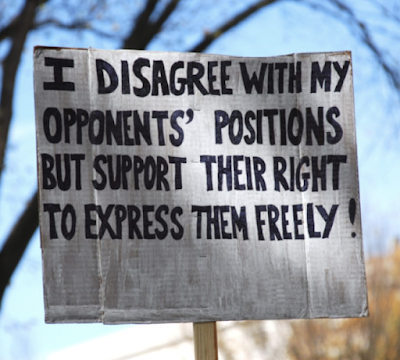
Sunday, June 19, 2022

Book Bloggers: Do you believe what you write to be true? Then don't delete comments that challenge you. (And I mean that encouragingly.)


The other day I read a blog post written by a book blogger regarding one of my favorite dystopian novels, and the writer said something that prompted me to comment. There is no reason to quote what was said or name the blog because they are not important. The reason for my writing is to point out something that I find too common and very disappointing, though very telling about our culture and society. 

QUESTION

If someone disagreed with you or dared to own a different viewpoint than yourself, and that person civilly and well meaningly commented on your blog in reference to a statement or opinion you made about a book, why on earth would you delete the comment? And furthermore, why would you NOT respond to the one who engaged you? 

You keep a blog publicly because you want to share your opinions and thoughts, I assume. You want to connect and make conversation with others who also read and are interested in books -- maybe even the same books. But do you only invite others who agree with you to read and comment? At least make that clear ahead of time that you do not appreciate or tolerate different opinions or opposition, and that those comments will be deleted. 

I know of one blogger who informed and threatened readers within the post that they would delete comments by anyone who mentioned this particular individual by name. And of course I commented that I didn't care if they deleted my comment because I still felt compelled to share my opinion. Granted, I brought that on myself because I was forewarned. But my goodness, how protective and defensive we have become as a society.

While it has only happened a few times that I have been deleted because a blogger disliked my comment, the sad truth is that I know of more times when I said, "Just forget it!" and decided against commenting altogether because I suspected it would not go over well if I said what I thought or even asked a question to better understand why someone thinks the way that they do. 

I do not want to start a confrontation, which is why I take time to carefully word my thoughts and am always civil and kind. I am more surprised that a blogger would delete a civil comment. Why not dialogue about what you believe; make your case, and win me over. Why not make use of your platform and promote your ideas further with someone who is engaging you? Why do they always have to agree with you?

ONE CONCERN

This is part of what is troubling to me: that today people are less likely to debate, dialogue, and have civil discord about their opposing opinions, worldview, and differences. They are more likely to immediately censor, cancel, and delete your comment.

Some irony: this particular blogger had read and blogged about my other favorite dystopian novels by Orwell, in which I totally disagreed with [their] synopsis, but I restrained myself. The blogger did not see the irony in [their] own behavior, to delete my little comment, to shut out a different viewpoint, and yet to be equally incensed by the tyranny and totalitarianism demonstrated in the books [they] just reviewed. Yikes!

I once had a very civil conversation with someone who completely disagreed with me on my religious opinion within a post I had published on my blog, and he began with a very hostile tone. Nonetheless, I knew that to engage him kindly would win him over. We had a discussion, and when it ended, he was much calmer, and I was able to get him to see some truth in what I had said; he didn't change his mind, but his mind opened more. 

There was another blogger who always shared her opinions with me, of which I am so grateful. She was engaging and inspiring. She once apologized for soapboxing on my blog, explaining that it was my personal blog and she had no businesses being so opinionated toward my writing; and all I could think was: this is why I write publicly. I invite conversation with those who agree or not. If I wanted to protect and shelter my opinionated ego, I would have kept my blog private. 

ANOTHER CONCERN

And here is the other part of my concern: you cannot argue for the protection of democracy -- a rule of the majority -- and then demand that the majority obey the minority; and you cannot cling to democracy if you are going to chop off the fingers of those who do not think the same thoughts or speak the same words as the minority. Democracy, if we must, is rule of the majority, and under American Democracy, particularly, we provide for protection of the minority. To provide for the protection of the minority, we must have, protect, and defend free speech. MUST! Speech must be protected because there will be different opinions and ideas, and they should be open to debate, acceptance, or rejection.  

Now, of course, you are not forced to listen to one's opposing view or opinion if you disagree and do not want to hear. You are not even forced to defend your own ideas. But how can you not defend your views or worldview, especially if you demand others think, speak, tolerate, accept, and obey your opinion??? If you cannot stand to have a civil discussion - even about democracy and especially truth - then you are demonstrating weakness, and your worldview is equally weak. You show that you cannot stand up for what you believe in. You have no argument. It's not a good look. 

If you have a blog -- any kind of blog -- and you write your opinions publicly for all to read, then you should be steadfast in what you write as true and solid. If you are challenged because a reader comments against your judgment, and you do not want to defend your words, then maybe you do not know what you are talking about. Maybe you don't even believe it to be true yourself. That is ultimately what you convey to others when you refuse to respond to someone's questions about what you wrote or to answer for your opinions. And when you delete civil comments altogether, well, then obviously you have absolutely nothing to offer. 

Books are a great opportunity to talk about the ideas we hold true, and a civil and engaging discussion is the best way to exercise those ideas, to see if we agree, or maybe to even change our mind. The free exchange of ideas is liberating and freeing. If the best retort you have is to hit the delete button on your keyboard, then I am very sorry for you.

* * *

Sunday, April 24, 2022

Covid Operation : What Happened, Why It Happened, and What's Next by Pamela Popper / Shane Prier


Covid Operation : What Happened, Why It Happened, and What's Next
Pamela Popper / Shane Prier
Published 2020
⭐⭐⭐⭐

If you figured things out a long time ago, then great! But for those only now questioning the truth, good; this is a book to start with if you want to know more. 

Covid Operation is cohesively organized, sensibly written, and well documented with supporting evidence at the end of each chapter. The title and subtitle tell you exactly what to expect. It is a quick, easy read about the origins, the players, the purposes, the consequences, and the possibilities beyond. In addition, personal stories (often heart breaking) are included in the "Consequences" chapter. 


Covid Operation was written and released in August 2020. Popper suspected early on that the numbers of cases, hospitalizations, and deaths did not justify lockdowns, restrictions, or masks, and she spoke out about it immediately. I cannot remember  how I discovered Pam's show, but it was early 2020. I found her short videos on YouTube regarding the universal response to the virus. She talked about how none of it made sense: the obsession with cases, the inconsistent lockdowns for small businesses but not big businesses, the science that did not support masks, the hypocritical governors turned emperors, the encouraged violent riots in the summer while restrictions for sports and other outdoor activities remained, and many other contradictions addressed in Covid Operation

On her channel, she highlighted the consequences of the lockdowns, school shutdowns, job losses, and business closures. People began writing letters to her, sharing their heartbreak and frustrations, including suicides of loved ones, and Pam read those stories on her show. 


Pam even discussed how she lost friends and colleagues whom she had worked with for years on issues of health and healthy living and eating, because they did not agree with her questioning government, the health departments, CDC, WHO, lockdowns, masks, and the like. They could no longer support her because of her position on the state of things, though she came to accept it because she made new friends and encouraged others in her position to make new friends with people who shared similar ideas. 

And even better...very, VERY early on, Pam mobilized people. Talk about being pro active: she formed groups and encouraged people to do in their communities what she was doing. (See Make Americans Free Again.) She wanted people to connect locally and help each other - doctors, teachers, nurses, farmers, ranchers, construction workers, mothers, fathers, church members, and anyone who knew how to do anything at all - converge and work together, form local systems and serve one another. 

I love Pam's spirit and perseverance. She is a leader and a stateswoman. She loves liberty and self-government, not power and control. She expects Americans to be responsible grownups. Pam pointed out daily that Americans were cowering in fear under the lies of little egomaniacs like Anthony Fauci and the threats of tyrannical governors and their unelected health officers. She basically encouraged her viewers to just ignore them and get on with life. 

I totally agreed with her because in my environment that was my personal experience and observation. Nothing made sense, and I could not stand living in a world where nothing made sense. It was maddening! 

I think it would be great if she did a follow up for 2021 - the year of the jab - because I believe the story behind the jab and the psychology implemented to make people comply is just as dangerous to American liberties and survival. But I sense that Popper has moved on, and she wants us to do the same. Ignore these liars and thieves. 

That is exactly how I have always felt about this entire mess. Is there a new virus? You bet.  Was it manufactured? Definitely. Did people die from it? Yes. But the numbers were inflated to create fear and hysteria so that everyone would comply with the draconian instructions. Everything was done differently than typical epidemics of years past because now there is a global concerted purpose and effort to prepare the world for new mandatory vaccinations, mass surveillance and control, digital currencies, and to usher in a global elite-controlled corporatist/technocratic government. Don't take my word for it; read Klown Schwab's own words: Covid 19: The Great Reset. (That's just my review, but I mean for you to read it and hear it from the elite's own mouth.)


I knew it was all a BIG/FAT lie because of the inconsistency of those whom the media propped up, like Fauci. That man was all over the place about masks, the spread of the virus, and later the jab. It was apparent to me that he did not know the truth about anything. He was basically making things up as he rolled along. I knew he was a fraud even before I read The Real Anthony Fauci. (Again, my review, but read the book yourself to get a history of the man.)

There are so many other warriors out there armed with the truth. Some of us cannot be scammed, and we don't want anyone else to be fooled. If you are done with the lies, Covid Operation is one of many sources; and here are some others:

Amazing Polly  (out of Canada) An amazing independent voice, kicked off YouTube for telling too much truth. 

Peggy Hall  and her YoutTube Channel (out of California) A champion, never tires of fighting the rubbish coming form Emperor Newsom and his Health Oppressors. She has armed Californians with the law.

The Great Barrington Declaration Three reputable doctors came together to point out the farce of lockdowns of healthy people and warned of the dangers very early on. It was a cry for sanity, but the world has not listened. 

Dr. Malone One of the many doctors who has given up his peace and quiet to stop the medical tyranny. He reminds me of a Modern Day George Washington. 

Dark Horse Podcast clips  Bret Weinstein and Heather Heying: an example of what free speech looks like when adults come together and logically pull apart issues to get to the truth. It's called critical thinking. 

Children's Health Defense  Robert Kennedy Jr.'s organization that has worked hard to spread truth about health -- healthy eating and living and environments -- trying to educate the world on the dangers of drugging and vaccinating our kids for every little illness. 

Man In America on YouTube, Rumble, etc. Soft spoken, always positive voice on being self sufficient, independent, pro active, realistic, and prepared for what is inevitable. 

The Truth About Covid by Dr. Mercola

There is so much more out there. This is only a sample of people I found in the early days and listened to what they were saying, and of course, remained in tuned only because they were saying what I was already thinking. 


One more thing: this is not an insult to people who lost love ones because of the virus. I know people who died, too. I also know a lot of people who got sick, including my husband and me, our kids, and our entire church family. We never made such a fuss about the flu, but here we are permitting our state and federal government to trample our Constitution in the name of health.

This post addresses the lies (overreaching and unconstitutional response) from our government (and the media). It is about losing our right to be in control of our lives and the sovereignty of our nation. That is why it is imperative that Americans stop complying, stop obeying the lies, and resist NOW. The lockdowns and mandates and school closures and rollercoaster ride has not ended. It is in a lull, but it will not go away unless we say NO MORE. It is a battle of the wills. And all I am saying is we have to stop it. Now. 

Friday, April 22, 2016

The Autobiography of Malcolm X


The Autobiography of Malcolm X   

Published 1965    

American

The Well-Educated Mind Reading Challenge Biographies

⭐⭐⭐⭐


I am not going to water this down: this book made me furious.  For sixteen out of nineteen chapters I was raging MAD.  And up through that sixteenth chapter, this was the most hate-filled, racist book I had ever read - even more than Mein Kampf.   This book is burning with hatred for whites, Christians, America, successful blacks, and even women.


Malcolm X was born in Nebraska, 1925, and life for him and his family was clearly unjust from the very start.  However, he was intelligent, sharp, quick-witted, and at the top of his classes; but when a teacher discouraged him from a career in law, he discarded his dream.  After moving to Boston to live with his older half-sister, he quit school (15-years old) and worked numerous jobs, some of which he lost due to his hot temper.  Instead, he invested in his social life, personal appearance, music, drugs, and eventually hustling.  He even had a white girlfriend as a status symbol.


Soon, his hustling and house burglary caught up with him, and he was sentenced to ten years (but served seven), although he said his harsh punishment was really because he had a white girlfriend.  It was in prison that Malcolm X transformed himself.  He copied the dictionary, teaching himself to read and write, and spent the remainder of his prison term self-educating by reading books from the prison library.

During his time in prison, Malcolm became a follower of Elijah Mohammad, the Messenger of Allah, from the Nation of Islam, a man-made religion and forgery of the Arabic Islamic religion.  I am just going to say this plainly: the Nation of Islam is definitely of Satan.  This hate-filled, racist, rebellious movement against white Christian America was very attractive to broken men like Malcolm X.


The Nation of Islam relieved blacks of any responsible for their lives of poverty, crime, drugs, drunkenness, or prison.  The devil race (white America) designed the system so that black Americans had to depend on them. The devil race made it difficult for black Americans to get out of poverty or the ghetto or into business or worthy careers.  Meanwhile, black Americans who did move out of poverty, educated themselves, owned businesses, or had careers were called Uncle Toms, seeking approval from the devil race.


I will skip over the kooky made-up story about race and how white man came to over power the original African race.  But Malcolm X totally bought it.


While in prison, Malcolm maintained correspondence with Elijah Mohammad, and when he was released, they worked together, opening temples all over the nation, reaching black Americans with the message: embrace your black identity, know your black history, stand up for yourself, and stop appeasing the devil race, your enemy.  Because of Malcolm X, the Nation of Islam spread rapidly and grew strong, but Malcolm always gave credit to Mohammad.  He worshipped the Messenger.


Imagine his shock and dismay when he learned that the "innocent, harmless, gentle little infallible lamb," "the Messenger of god," had several adulterous affairs and fathered four children.  Yet, the man who punished other NOI members for their adultery would not be rebuked himself. Furthermore, Malcolm X began receiving rumors that Mohammad was speaking disrespectfully about him, and even threatening his live.


About the same time, three chapters to the end of the story, Malcolm considered the simplicity of pure Arabic Islam, and he decided to take a pilgrimage to Mecca.  His life changed drastically. Being a black Muslim from America, Malcolm X was treated like royalty.  He met heads of state and world leaders.  Everyone wanted to meet him and talk to him.  Surely, he was a novelty.  Meanwhile, he was shocked to find Muslims of every color worshipping together, as race was not a concern or issue.


However, in Mecca, he began to understand that race was not the problem, but American society made race an issue.  In other words, (and this is what REALLY upset me) Malcolm had wrongly believed that white people were automatically racist, and he could not accept or understand whites who wanted to join the movement to end racism.  He rejected them because they were inherently racist. Now he came to see "it isn't the American white man who is a racist, but it's the American political, economic, and social atmosphere that automatically nourishes racist psychology in the white man (and I would add today, in everyone)."  He agreed,


American society makes it next to impossible for humans to meet in America and not be conscious of their color differences.  And [he] agreed that if racism could be removed, America could offer a society where rich and poor could truly live like human beings.


It was because of what he experienced in Mecca that softened his heart and opened it to all people of different colors and different religions and no religion at all.  He found his new mission was "to make the Human Family and the Human Society complete" (which sounds like a hippie utopia to me, but it was a lot better than what he was spewing).


When Malcolm X returned from his very long pilgrimage, he officially left the Nation of Islam and started his own Black Nationalist organization, keeping his Muslim religion.  (Of course, the NOI website claims that Malcolm X separated from NOI over "confusion" of Elijah Mohammad's "private life;" and that the U.S. government played a role in the assassination of Malcolm X.  - They are so full of it! -  The killers were from NOI, sent by the wicked corrupt man who called himself a Messenger of god.)


Malcolm continued to build up and encourage the black community, although he still expected government deal with some race issues.  He also believed in violence, if other options did not work, even if others were harmed in the process.  


At the end of his biography, he talked of his readiness to die, and I suppose that was heavy on his mind because, like I said, he heard the rumors and knew his life was in danger.  So it is eerie that shortly after, in 1965, he was assassinated during one of his temple meetings.  He was shot 21 times, and died probably before he arrived at the hospital.


Keeping Racism Alive in America


Racism is big business in America.  Maintaining an emotionally charged, agitated, and divided electorate over race is what garners votes and keeps a major political party in power.


Malcolm X touched on this briefly at the end of his autobiography.  One political party panders exclusively to black Americans, keeping them dependent on government; yet, they never make their lives better.  This party tells black America that their socio and economic problems are not their responsibility, nor can they help themselves.   This is a lie!


If you didn't know better, you would think slavery ended yesterday and America was still segregated. Selfish, greedy self-interest groups, and the aforementioned political party, use hatred and division for political purpose and power.  Racism is conveniently applied to all areas of American culture and society.  It is as if racism has gotten worse; but if you examine it, you will notice that it is devised, exaggerated, and unfounded.


Life for black Americans has drastically changed for the better since Malcolm X's time. Unfortunately, racism is still used for political gain, and, by design, has generated resentment and restlessness, further perpetuating hatred and violence, preventing Americans from moving forward and realizing that ideal that Malcolm X imagined for America:

a society where rich and poor could truly live like human beings.

"The Ballot or the Bullet"


On April 3, 1964, Malcolm X gave his famous "The Ballot or the Bullet" speech, on the upcoming election.  Here is a portion of that speech:

The government itself has failed us, and the White Liberals who have been posing as our friends have failed us.  Once we see that all these other sources to which we have turned have failed, we stop turning to them and start turning to ourselves.

Your are the one who sent Kennedy to Washington.  You're the one who put the present Democratic administration in Washington, D.C.  The Whites were evenly divided.  It was the fact that you threw 80% of your votes behind the Democrats that put the Democrats in the White House.  When you see this, you can see that the Negro vote is the key factor.  And despite the fact that you are in a position to be the determining factor, what do you get out of it? 


Democrats have been in Washington, D.C. only because of the Negro vote.  they've been down there four years and all the legislation they wanted to bring up they brought up and got it out of the way, and now they bring up you.  You put them first and they put you last, cause you are a chump.  A political chump. 

The party that you backed, controls two-thirds of the House of Representatives and the Senate and still they can't keep their promise to you, 'cause you're a chump. 


After Malcolm X left NOI, he recommitted to the task of teaching black Americans to work for themselves and help each other in their communities. He believed the race problem in America was not a Civil Rights issue, which the government could fix, but it was a human problem that needed black people everywhere to organize and be involved.   Only they could solve their own problems.


Racism is not going to totally disappear anywhere on earth unless it is dealt with at the heart of the problem - in the heart of individuals and families and communities.  And it will never go away so long as political parties continue to use race for gain, and - in America's case - black Americans continue looking to a political party to provide for and lift them up.  Instead, they must believe in and do for themselves.  


On a Long Personal, Political Rant Note


The reason I bring this up is because I see the destruction that greedy perpetuation of racism causes. It angers me that the Democrat party in America has gained from its deception about race and the Republican party.


Racism is illegal in America; all discrimination to prevent anyone from education, employment, housing, and other benefits has been removed.  All Americans have access to free public education. Lower economic classes may apply for financial aid to attend community colleges, universities, or trade schools.  One may even work hard in high school and earn a scholarship for higher education.


Every American has a right and obligation to do something.  Don't just sit there and be a victim. Go out and find work or start a business.  Work hard.  Be a leader.  Stop complaining. Stop making excuses.  Maybe it's not someone else's fault; maybe you need an attitude adjustment.  Stay away from drugs and alcohol, don't have sex out of wedlock, finish high school, and contribute to society. For a long time, this was the message of the Republican party - a message that was deemed racist by Democrats and other groups that benefited from crippling black America into another form of slavery.


Black Americans were Republicans since the 1860's because Republicans ended slavery and encouraged black Americans to fit into society.  But blacks switched parties during the Great Depression, even though FDR's policies coaxed peopled into dependency on government. (Once you get on government, it's hard to get off.)  The Democrat party has benefitted from continuing these policies, and much of black America is still dependent on that party to make something happen.  My argument is, black America must stop looking to government, period, and make changes themselves. I believe this is part of the message Malcolm X had, as well.


Honestly, I can't speak for today's Republican party anymore because it has morphed into the Democrat party. By the way, that guy Donald Trump is NOT a Republican, either.  The Republican party is not very conservative anymore.  All I know is this: if I lived during the Civil War, I would have been a Radical Republican, a proud Abolitionist!!  


All men are equal in God's sight, and skin color has nothing to do with race.  We are all one human race.  The most important human traits are your character, how you treat your neighbor, and what is in your heart.  


P.S.  And my message to anyone (Hispanics, too) who thinks he is not considered American because he is not white: that is a lie, too.  Dump it, and don't let it define you.  If you are a legal American citizen, that is enough. Your skin color does not determine if you are American.  If you even love this country, you are American, in my book.  


P.S.S.  If you are curious how it came to be that we are different skin tones, here is a video (Answers in Genesis) that provides a biblical explanation on how this may have occurred.  It's short and interesting. 

Tuesday, July 14, 2015

Up From Slavery by Booker T. Washington


Up From Slavery

Booker T. Washington

Published: 1901

The Well-Educated Mind [biographies]

⭐⭐⭐⭐⭐ 


This is my third slave narrative and my fourth book about American slavery, this year. Slavery is never an easy topic to read about; however, Up From Slavery is actually extremely encouraging and inspirational.  


The short version of Booker T. Washington's life is that he was born into slavery and was under age ten when slavery ended.  After the Civil War, he moved with his mother and brother to the North. As a young boy, Booker worked to earn money for the family, but what he desired most was an education.  Even in utter poverty and unimaginable hardships, he found a way to go to school and gain knowledge. 


At school, Washington proved himself a hard worker and dedicated student that he was recommended to open a new school in Alabama, which would become the Tuskegee Institute.  He remained the leader and representative of Tuskegee until his death in 1915.  


Tuskegee would become his life work.  He literally built and expanded the school with his bare hands, along with students. He made it his responsibility to secure donations or loans from wealthy individuals and politicians to purchase the land, buy supplies, and furnish the school. The students provided all of the labor because he wanted to teach that there is dignity in merit, industry, and labor.


At the time, ex-slaves believed education (book learning) was the way to avoid hard labor, but Washington wanted them to learn the value of building, creating, and making something worthy and necessary with their own hands, something they could use personally or to sell it because there was a demand.  In turn, students learned a skill, which they were good at and could earn an income.  He taught them how community works.


Some controversial ideas from Washington involved his attitude about the white race.  He forgave slaveholders and never harbored negative feelings towards them or whites.  Of course, he was only eight when he gained his freedom, and he hardly had a memory of slavery. While he sought to lift up the black race, he also wanted to see the same done for the white race because he knew that whites suffered, too, because of slavery.  For example, after the War, southern whites scarcely knew what to do with themselves because they were accustomed to servants doing everything for them.  Surely they needed assistance in learning and living, just as the black race.  He did not want to see whites being left out of any programs or projects that were meant to help only the blacks.  Washington said,


if Congress wanted to do something which would assist in ridding the South of the race question and making friends between the two races, it should, in every proper way, encourage the material and intellectual growth of both races.  


Washington was also worried that the Republicans were pushing too quickly on the black community to get involved in politics when he knew they were not prepared to be in office. He believed the Republicans were using the blacks to gain power in the South, which is very probable, and Washington was more concerned with the moral and intellectual stability of the black race, first.  


He also said that the generation he was teaching now would need to understand that they were laying the foundation for their future children and grandchildren, that they "could grow to higher and more important things in life."  In other words, they were going to have to start at the bottom and work their way up.  They could not expect to begin at the top.


No race can prosper till it learns that there is as much dignity in tilling a field as in writing a poem.  It is at the bottom of life we must begin and not at the top.  Nor should we permit our grievances to overshadow our opportunities.


I understand now why Booker T. Washington was and still is called an "Uncle Tom" by other blacks: because his ideas and policies were and are passive and conservative.  He was eager to see the races equal and did not argue for the "rights" of the black race.  He rather show through hard work, dedication, industry, and education that the black race is worthy of respect and has a place in society.  He wanted to demonstrate that, if given the opportunity, blacks would contribute to their community and prove to be worthy.


He had a positive vision for his people and for the nation and its future.  If this had been the only book I ever read about slavery, I would have thought that the issue of racism was done and over with in America, since Booker T. Washington's time.  He highlights how eager wealthy, white people were to work with or support him in his endeavors, which is why he believed that people would reward merit and that rich people would always support good work someone else was doing. 


But what happened to Washington's ideals?  What happened to his vision?  What happened to his America?  


This reminds me of a story:  Hurricane Katrina hit the Gulf Coast in 2005.  The city of New Orleans, which is already below sea level, was in danger.  The Mayor had issued a mandatory evacuation order, but for whatever reason, many stayed behind.  When the hurricane was over, the levies (which protected the city from the sea) broke, flooding the city.  (No, President Bush did not blow up the levies). 


Many people fled their flooded neighborhoods to get to the Superdome, which had been open to the public, but had remained surprisingly empty during the storm.  And for another unknown reason, the Superdome WAS NOT STOCKED with supplies or resources. THE CITY WAS NOT PREPARED!  People thought they would spend a few hours through the storm and then it would be over.  But that did not happen.  When crowds of helpless, tired, sick, elderly, hungry, frightened, angry people showed up at the Superdome at the same time, it was pure chaos.  This lasted for three days!  


This was frustrating to watch on TV.  When buses arrived at the Superdome, they took 150,000 people and transported them to Houston, Texas, where many of them would start new lives.  Instead, I thought, why not find a way to keep the people in the area? Louisiana could not accommodate her own people?  Why not have them rebuild their city?  After all, the media was talking about how they were all out of work (especially now).  Work?  There would be so much work to be done; someone was going to have to do it.  


And what about all of the people who remained, only to live in FEMA trailers for YEARS and YEARS, waiting for someone else sent by the government to rebuild their home?  Really?  If we learned anything, it is that government fails us on these levels.  How much faster could we get it done ourselves if we could be proactive and involved, instead of waiting for [government] to do it for us?


If Booker T. Washington were alive today, he would have advocated that all of the capable people rebuild their homes, their churches, their neighborhoods, and their community.  He would have rolled up his sleeves to work, too, instead of waiting for government.  Imagine the lessons that would have been learned.  Imagine the skills gained. Imagine the sense of accomplishment.  Imagine the new lives built up after such suffering.  


Booker T. Washington was an insightful, optimistic, brilliant leader.  I'm not sure that America makes those anymore, but we could use one about now.  


Monday, September 09, 2013

The Stranger by Albert Camus


The Stranger

Albert Camus     

Published 1942

French Novel

The Well-Educated Mind Novels

⭐⭐


Strange philosophical ideas


The Stranger by Albert Camus is a super short novel, but its substance is heavy.  The main character, Meursault, unsympathetically attends his mother’s funeral, begins an immoral relationship with a female co-worker the next day, becomes involved in his debauched neighbor’s problems, and ends up murdering a man without reasonable motive.


The Stranger is appealing, specifically because it highlights philosophical ideas that express why we are where we are today as a society.  As much as I appreciated the opportunity to read The Stranger, I completely disagree with this philosophy.


To begin, Meursault is honest about the way he views everything; I value that. But he does not seem human: he is without emotion or empathy; is animalistic in his thoughts; and is disconnected from people.  I wondered if he was not a little mentally challenged or childlike.  


I suppose his story would be acceptable if my speculations were true; but the problem is that this is his attitude.  He does not judge between what is right and what is evil.  He thinks society ineptly seeks logical meaning behind man’s behavior and purpose; yet, he thinks there is no explanation for either.  Society cannot know if there is truly a purpose to life; therefore, there is no reason to care.  Man is like nature, and nature does not care either. 


Grammar-Stage philosophy


Meursault only scans the physical world around him.  It reminds me of grammar stage of reading, in which I focus only on main points of the plot or actions of characters - as a child would observe.  There is no deep reasoning or exploration.  So, too, this attitude claims that man can only observe the physical attributes of nature and man, but he cannot know anymore than that.  Meursault comes to the conclusion that life is really rather hopeless, not purposeful or meaningful.  We all die – what does it matter how or when?  All life is equally worthless.


A stranger among us


Meanwhile, society does not understand this, and hence, Meursault is like a stranger within our society.  Moral human beings grieve or love or feel empathy, and those who do not have feelings are odd - a danger to us.


The author tries to make the case that man is irrational for trying to make sense out of senselessness by proving how dangerous Meursault’s apathy is to society.  He does not follow a moral code; therefore he should be removed from society.  Hence, there is a hint of the idea that we should never judge the behavior of others because we cannot reason.


Another soapbox


I cannot consent to any of this because I believe otherwise. When I observe the natural world around me, I see a Creator who designed everything to work together in order and with purpose. Everything is integrated into life cycles, including man.  And as for man – he was created in the image and likeness of God. Man naturally has mood and emotion and does not need to be taught how to feel or react to life emotionally.  These are acts that separate us from animals.  


In addition, God created man capable of thinking rationally, logically, and deeply about the world.  Great minds have come before us and did not achieve greatness by being mind-numb imbeciles who never went beyond the grammar stage of their observations of life.  They have proven or reflected order and structure of the world and man’s purpose and significance within their works of religion, art, music, literature, medicine, science, and government.


Isn't “Judge not” judging?


This attitude displayed by Meursault is in the roots of today’s arrogances about morality being ambiguous or not judging others’ behaviors.  Man is called to judge sinfulness, immorality, and to recognize truth, and on and on. Isn't Meursault also judging by assuming one is absurd for trying to make sense where there is none?  Society is meant to have a moral standard, and when society removes morality from behavior, then we are left with a lack of accountability and disorder, as was the case with Meursault expecting to get away with murder.


Man’s idea of hope is hopeless

Meursault expressed a feeling of hopelessness in life, and he only rids himself of the gloom once he admits his inevitable end. What does it matter if he dies now or in old age?  


This is irrational to me!


Here is his problem: he utterly rejects his only chance for real hope – and that is in forgiveness and salvation through Jesus Christ.  A few tried to save Meursault, but he chose to hold on to his own ideas about the world. 


The purpose of man: to glorify God and enjoy Him forever.


The only true hope is in Christ; one in absolute despair can still experience fullness of life if he has the Truth.  This world can leave man totally empty and low, but if he has salvation through Christ, he will be full and complete and know what it is to have hope in this world.  His eyes are open to the Truth, and he will never fall for false doctrines of man, such as this philosophy that offers nothing but hopelessness and lies.


Absurdism is absurd

Finally, in my research I learned that this philosophy that Albert Camus practiced was called Absurdism, named for man’s absurd and futile attempt to make sense of the world and of human behavior; but I am certain that the only absurdity about it is how anyone could accept such nonsense.


About:

Absurdism, therefore, is a philosophical school of thought stating that the efforts of humanity to find inherent meaning will ultimately fail (and hence are absurd) because the sheer amount of information as well as the vast realm of the unknown make certainty impossible.


In absurdist philosophy, the Absurd arises out of the fundamental disharmony between the individual's search for meaning and the meaninglessness of the universe. 


Lastly, a person can choose to embrace their own absurd condition. According to Camus, one's freedom – and the opportunity to give life meaning – lies in the recognition of absurdity. If the absurd experience is truly the realization that the universe is fundamentally devoid of absolutes, then we as individuals are truly free. "To live without appeal,"[15] as he puts it, is a philosophical move to define absolutes and universals subjectively, rather than objectively. The freedom of humans is thus established in a human's natural ability and opportunity to create his own meaning and purpose; to decide (or think) for him- or herself. The individual becomes the most precious unit of existence, representing a set of unique ideals that can be characterized as an entire universe in its own right. In acknowledging the absurdity of seeking any inherent meaning, but continuing this search regardless, one can be happy, gradually developing meaning from the search alone.